Are you searching for the NECO English Language Questions and Answers 2026/2027 (Essay, Objective & Test of Oral)? If yes, this page provides the latest updates, examination information, revision tips, and important guidance for candidates preparing for the examination.
The NECO English Language paper is one of the most important subjects in the Senior Secondary Certificate Examination and is compulsory for most tertiary institution admissions in Nigeria.
This page serves as a live update centre where candidates can find verified information before, during, and after the examination.
NECO English Language Questions and Answers 2026/2027 (Essay, Objective & Test of Oral) | Live Updates
The NECO English Language examination consisting of the Essay, Objective and Test of Oral papers is scheduled to hold according to the official timetable released by the National Examinations Council.
NECO 2026 ENGLISH LANGUAGE PAPER TYPES (A – D)
TYPE A
TYPE B
TYPE C
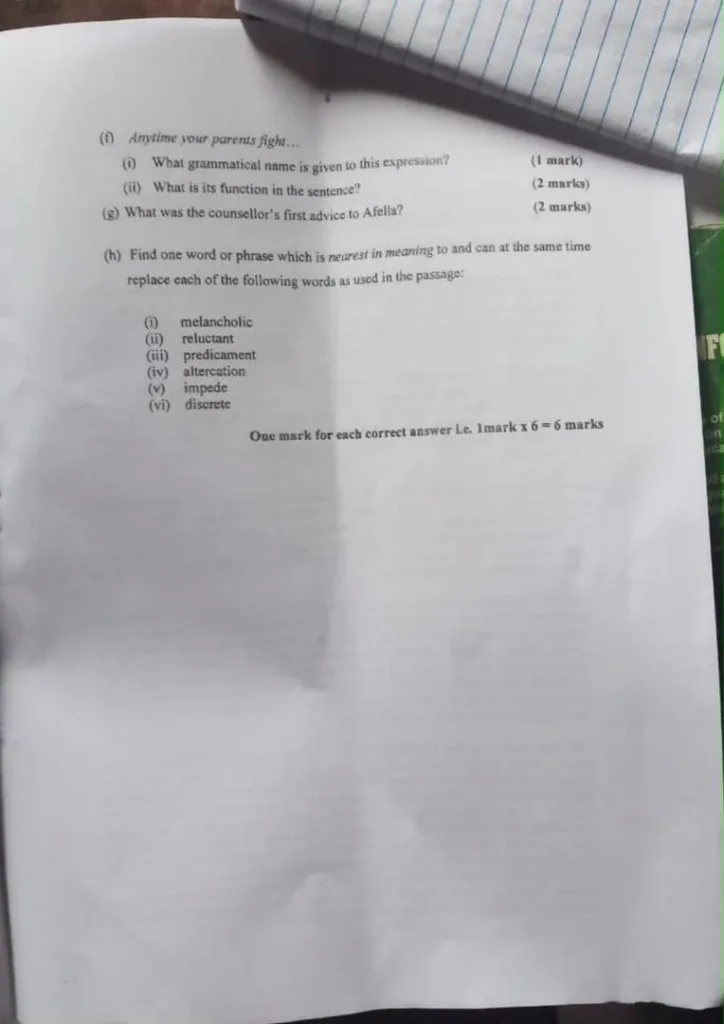
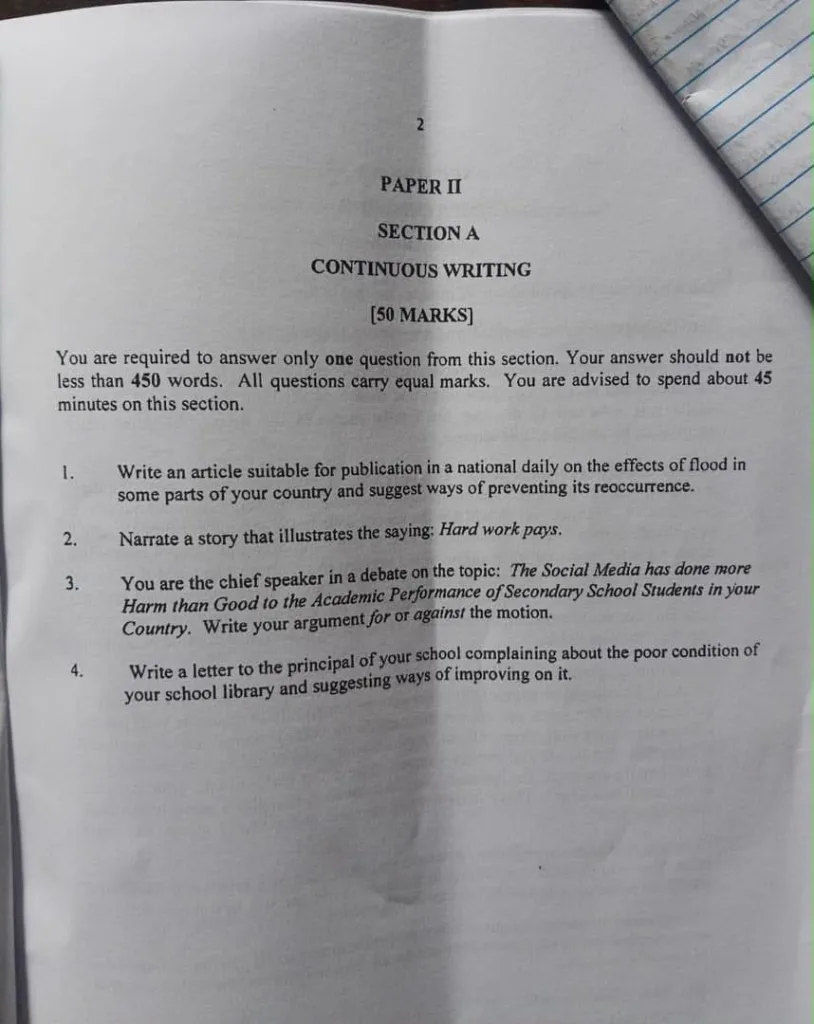
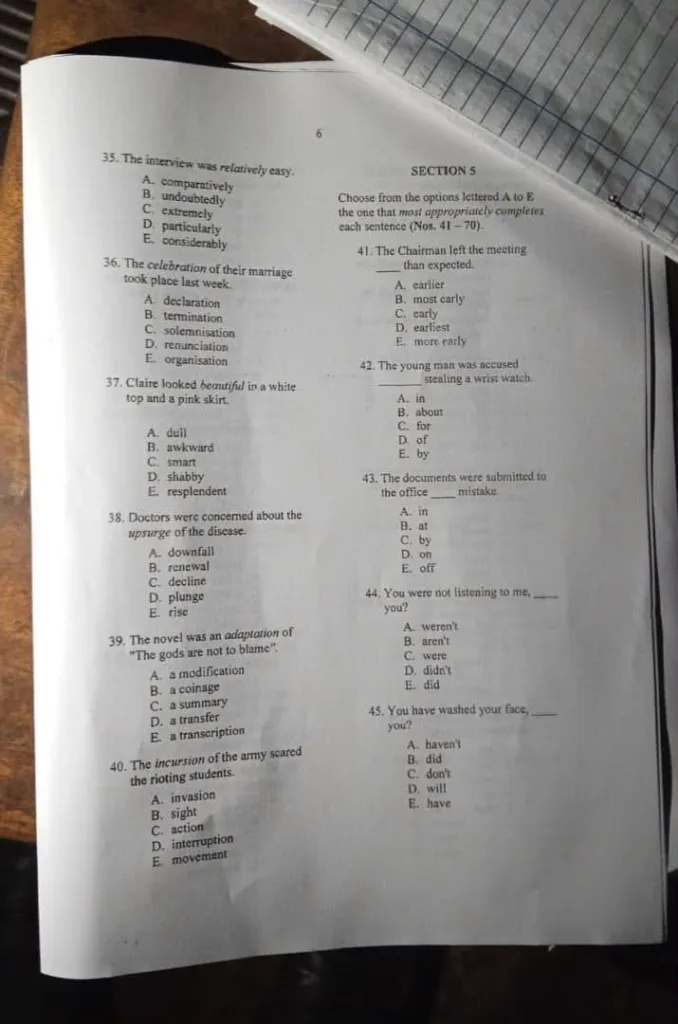
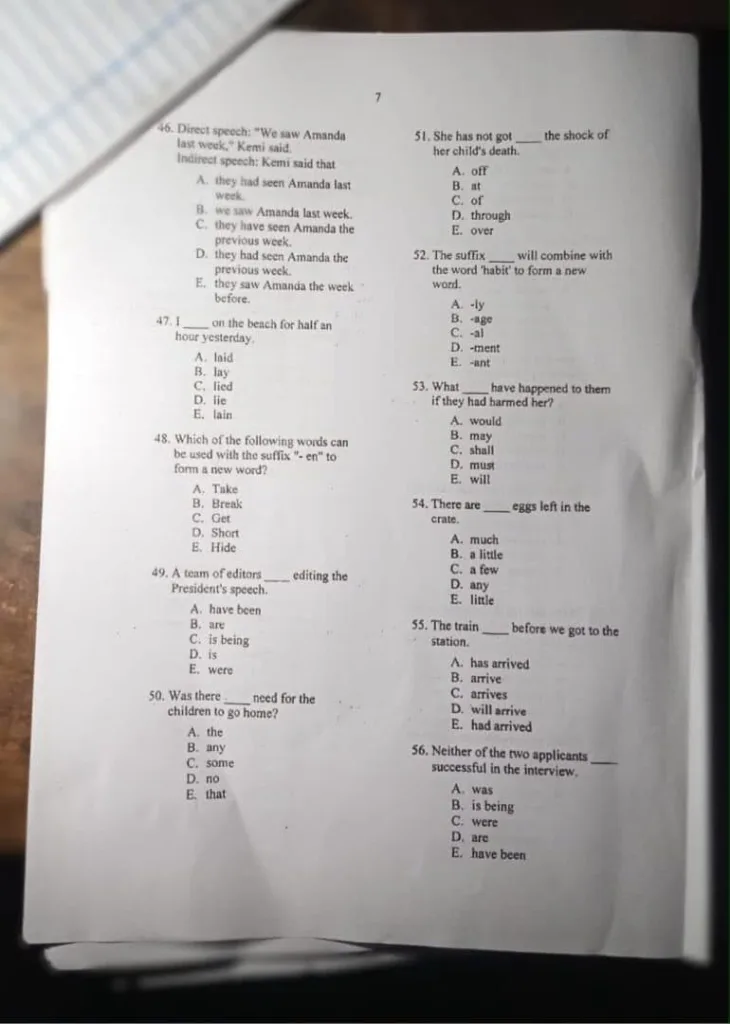
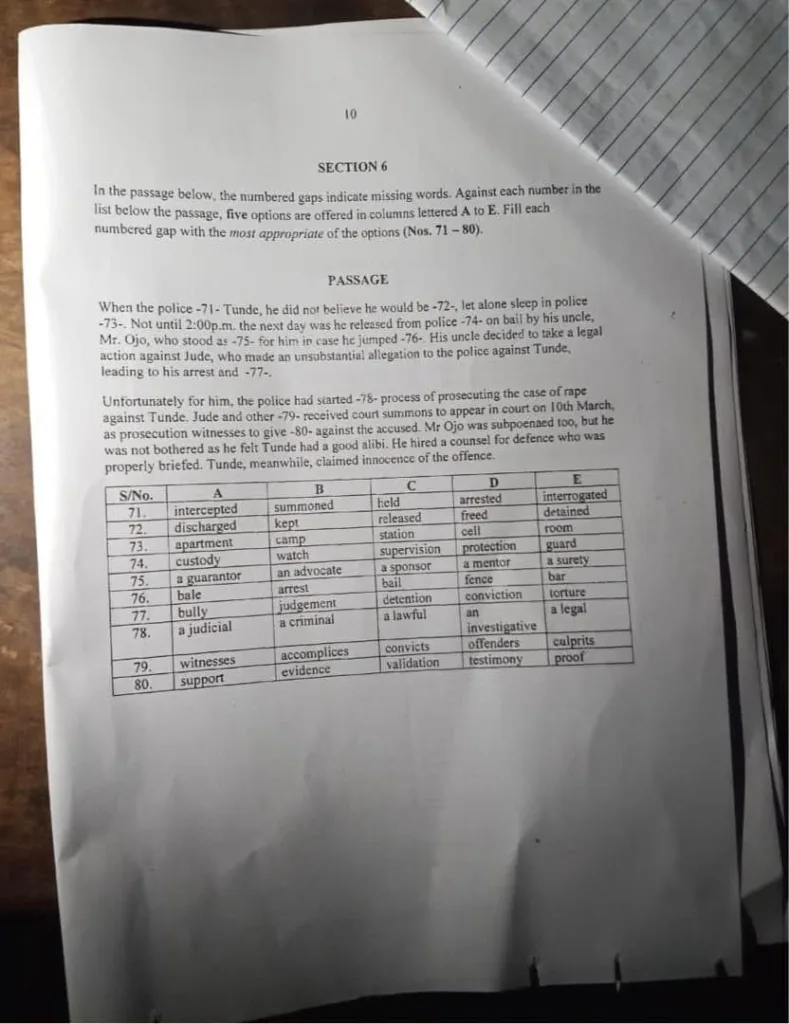
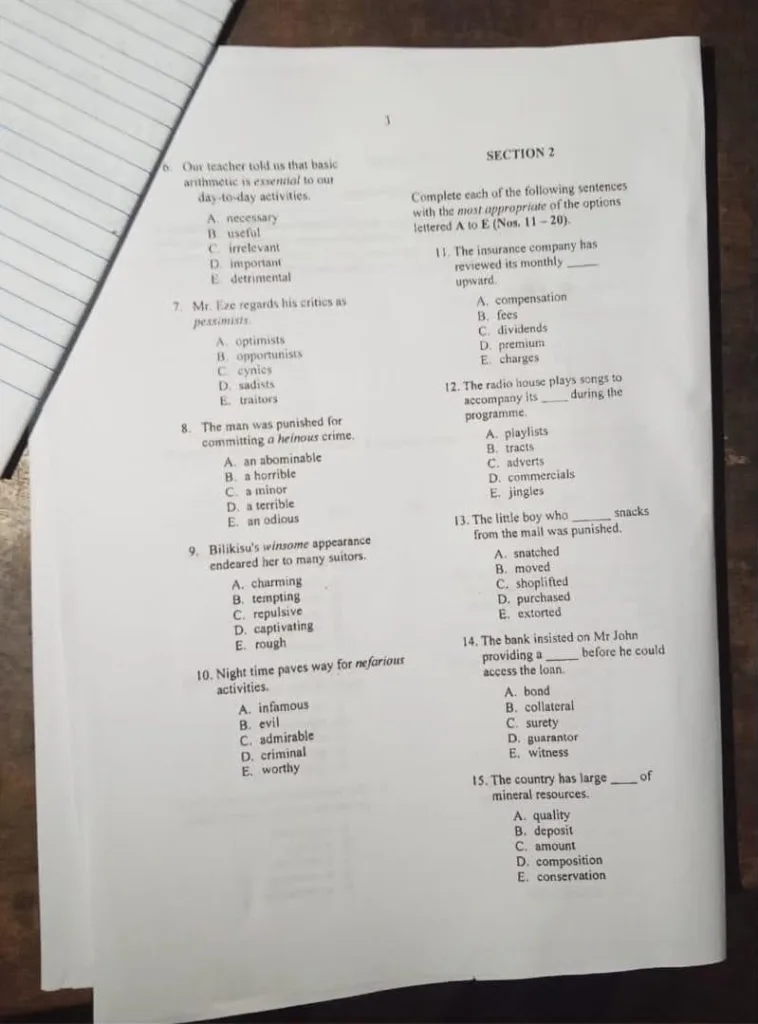
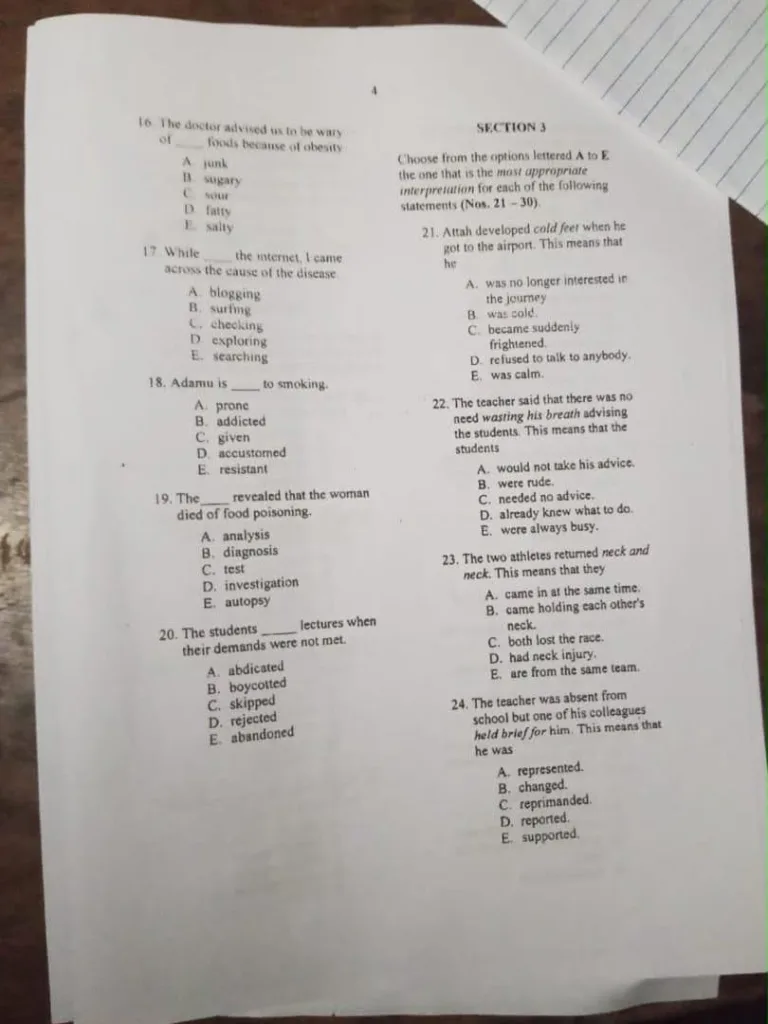
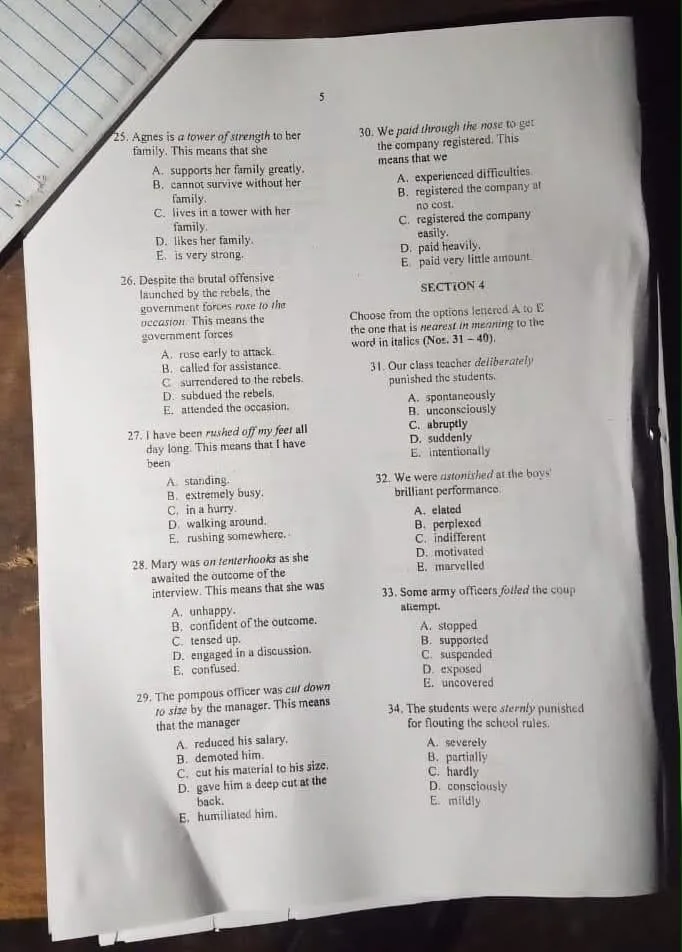
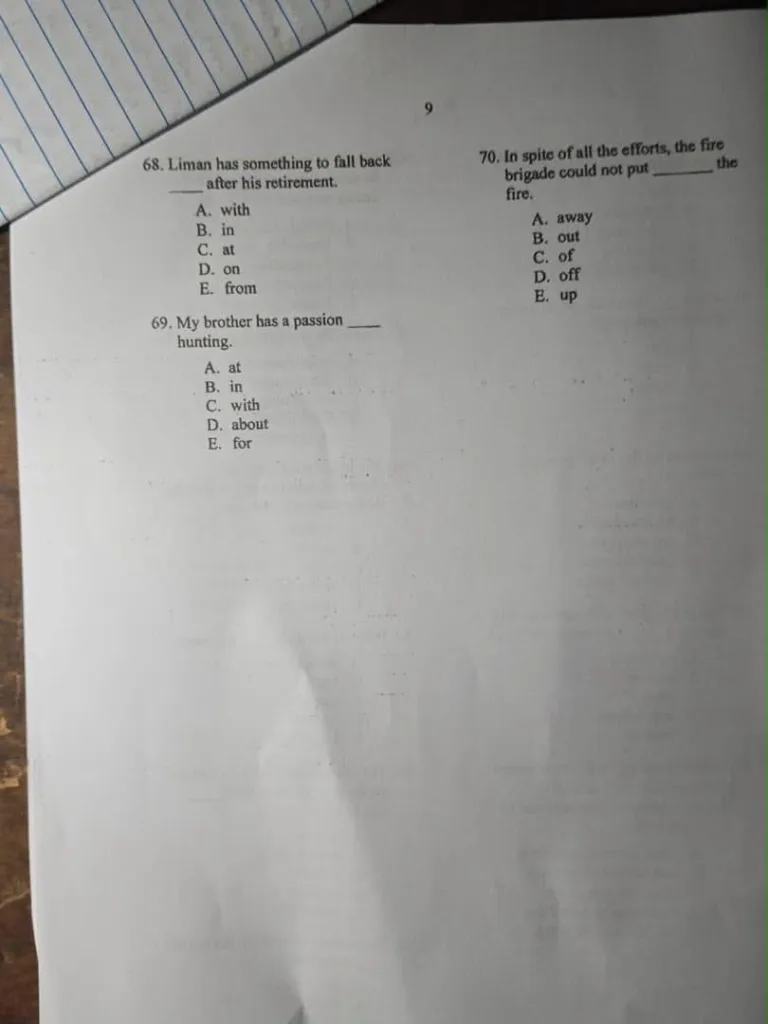
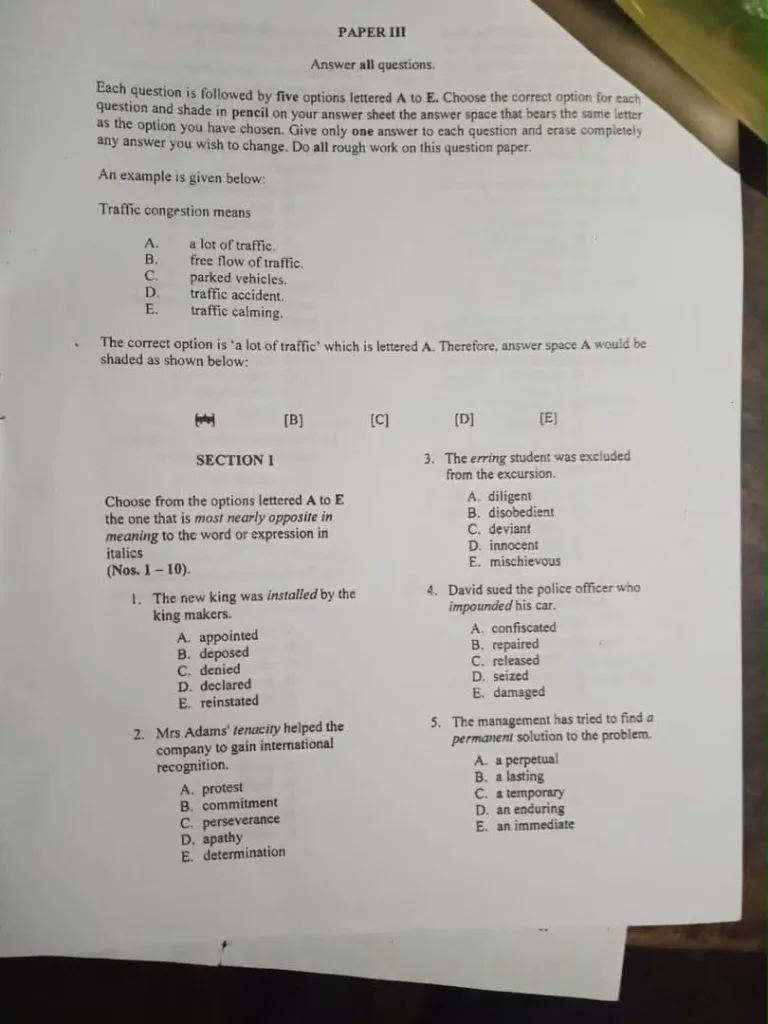
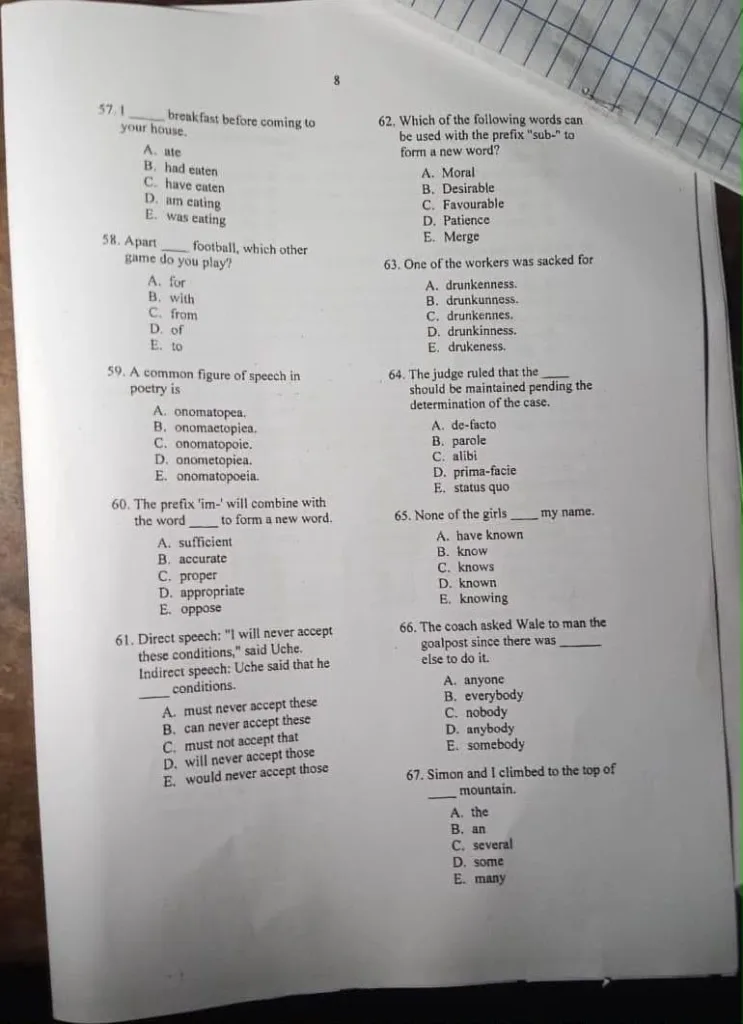
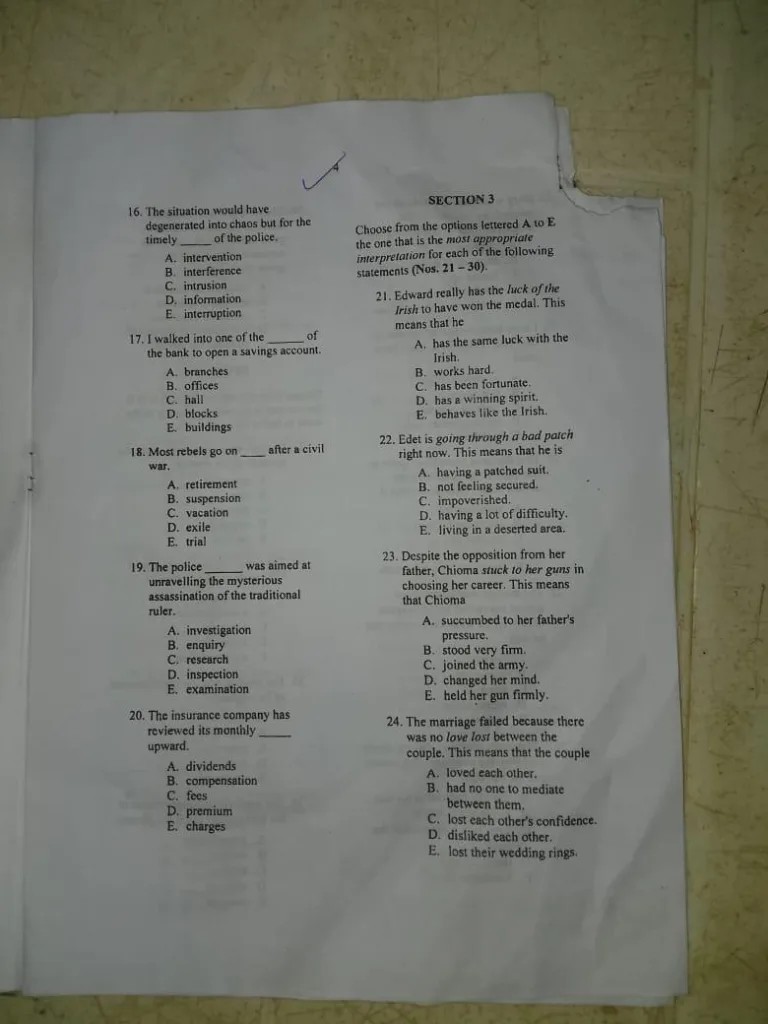
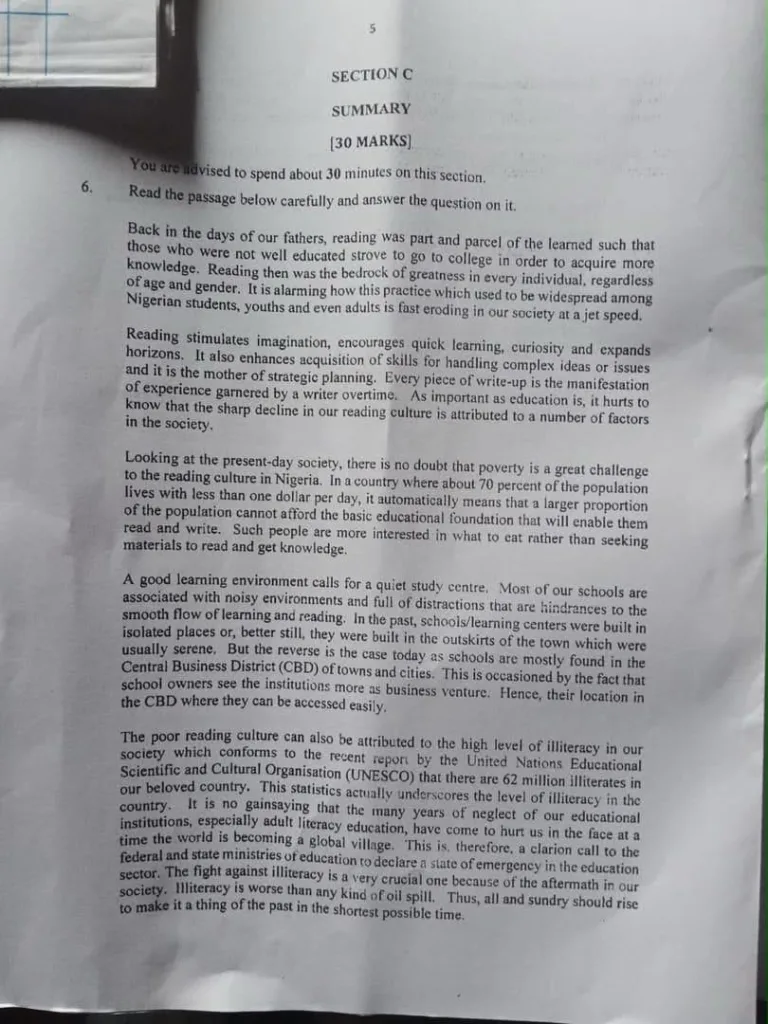
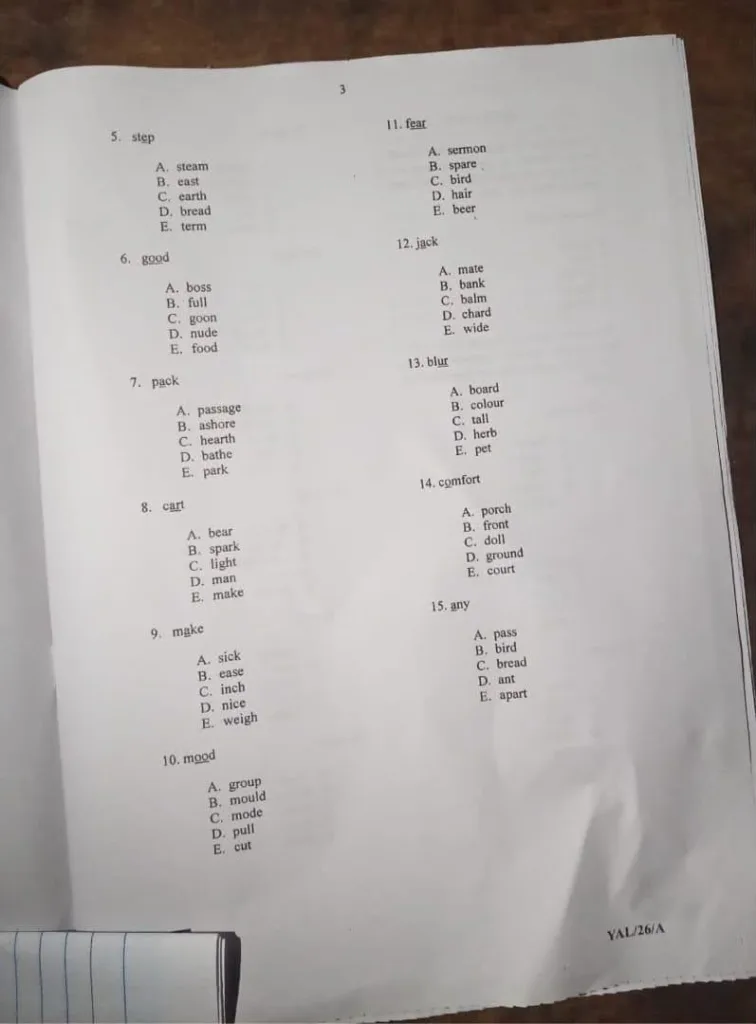
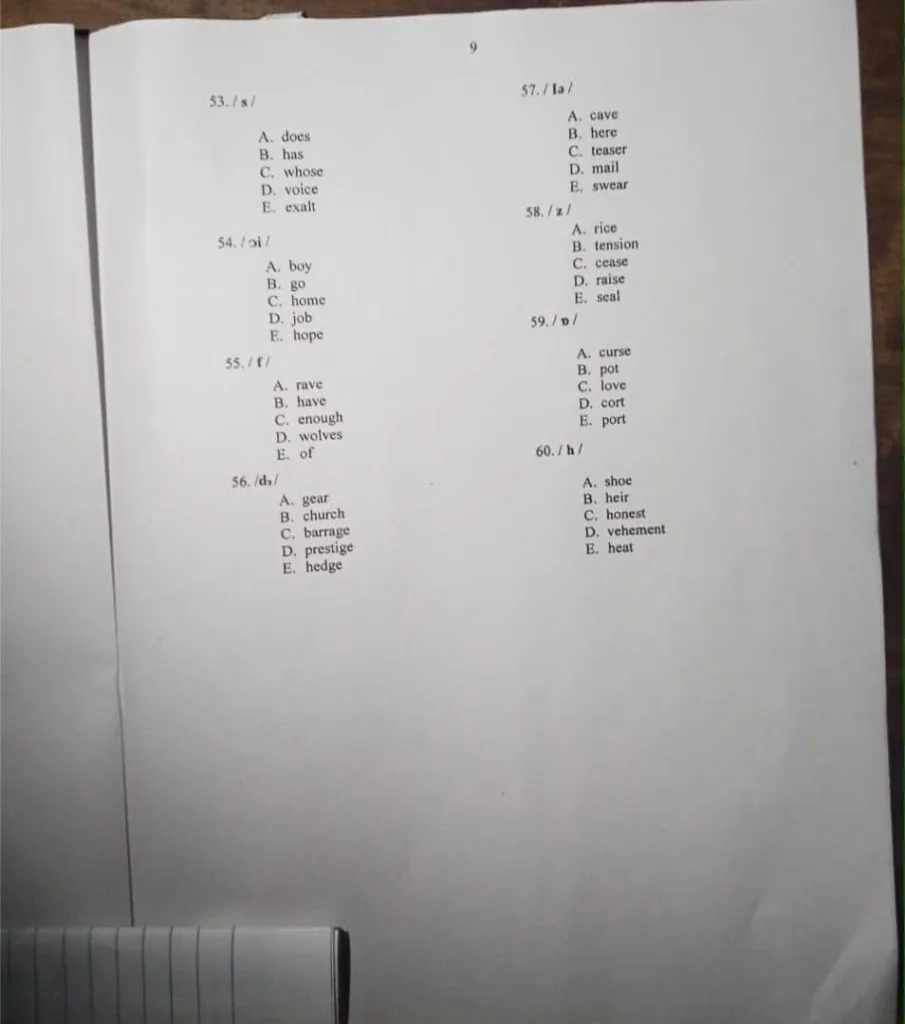
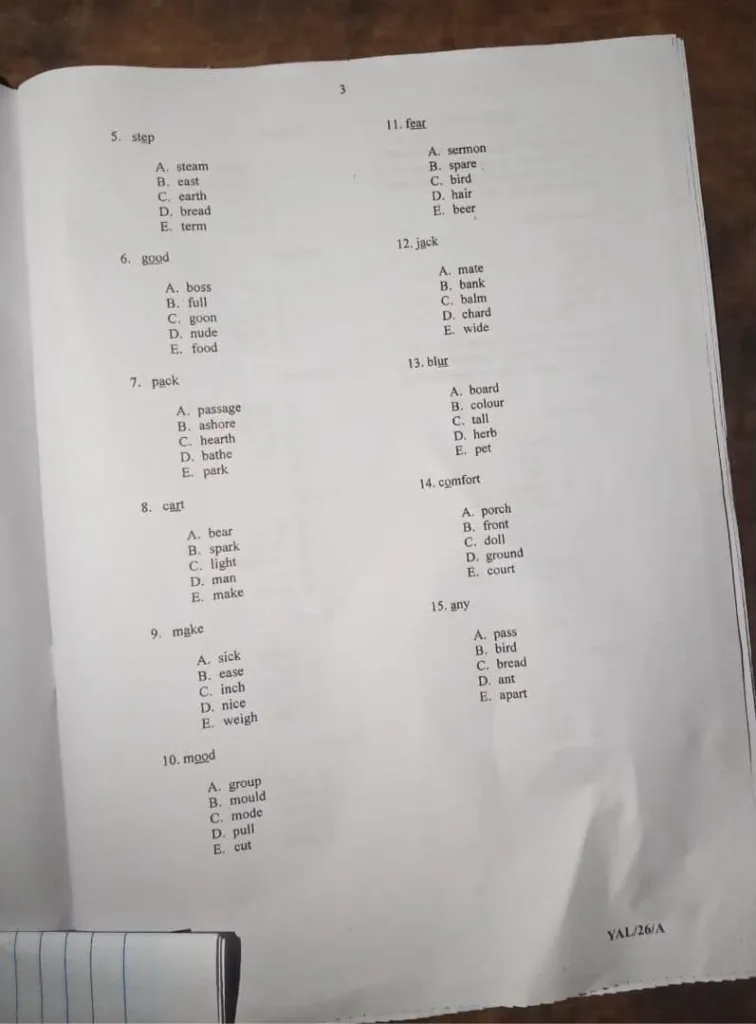
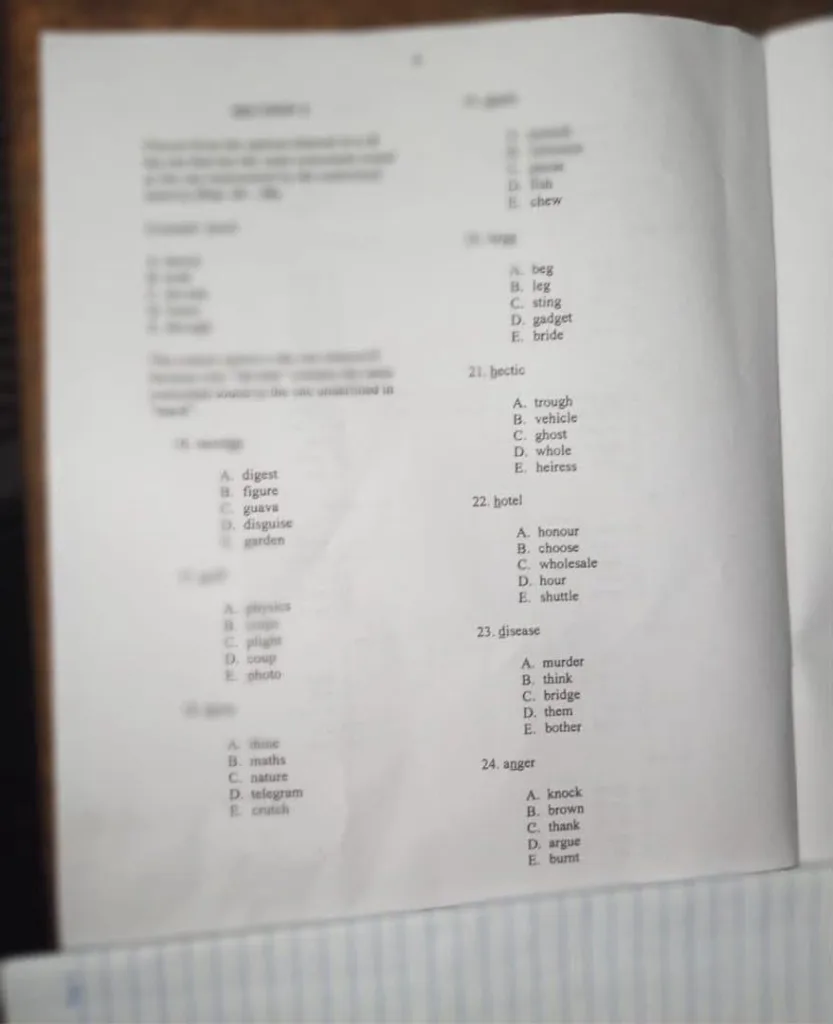
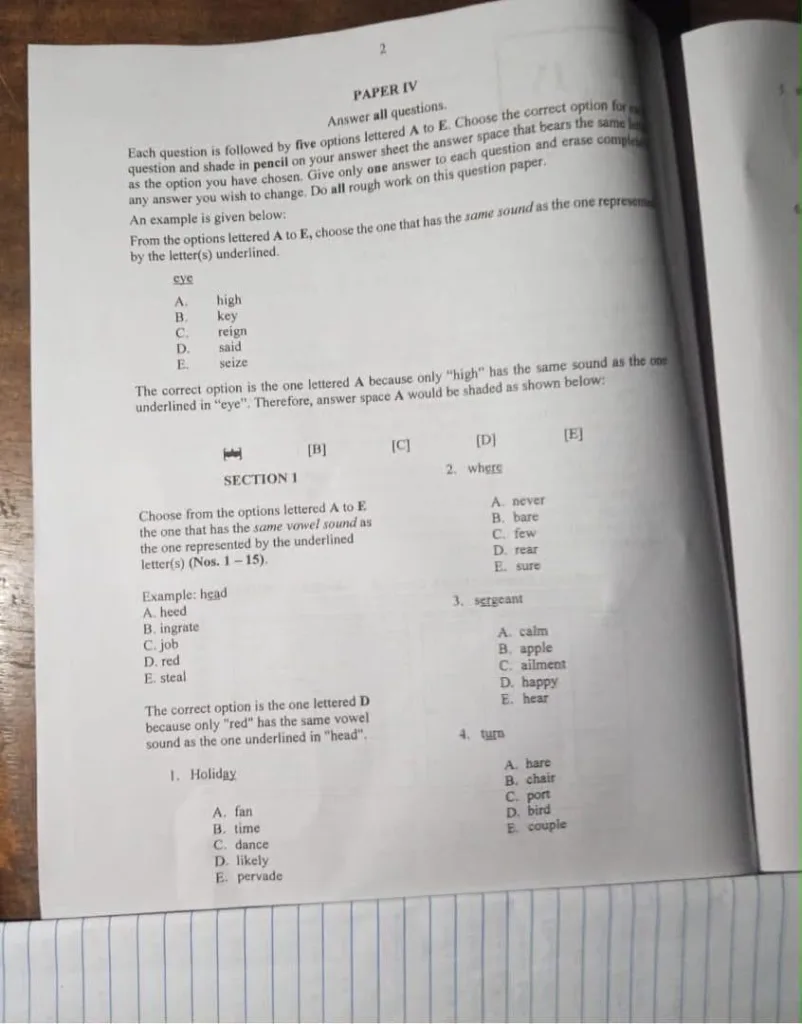
NECO EXAM PAPER TYPES
GROUP 1
(i) Anambra state
(ii) Oyo state
(iii) Bayelsa state
GROUP 2
(i) Enugu state
(ii) Edo state
(iii) Delta state
(iv) Plateau state
GROUP 3
(i) Kaduna state
(ii) Rivers state
(iii) Taraba state
GROUP 4
(i) imo state
(ii) Osun state
(iii) Kwara state
(iv) Sokoto state
GROUP 5
(i) Nasarawa state
(ii) Zamfara state
(iii) Niger state
(iv) Ebonyi state
GROUP 6
(i) Abuja FCT
(ii) Kogi state
(iii) Benue state
(iv) Ogun state
(v) Bauchi state
(vi) Kano state
GROUP 7
(i) Ondo state
(ii) Cross Rivers state
(iii) Borno state
(iv) Jigawa state
GROUP 8
(i) Lagos state
(ii) Adamawa state
(iii) Ekiti state
(iv) Abia state
(v) Kebbi state
2026 NECO ENGLISH ESSAY TYPE A NUMBER ONE
Unity Secondary School,
P.M.B. 112,
Amaeze Community,
Enugu State.
15th July, 2026.
The Chairman,
Amaeze Local Government Council,
Amaeze,
Enugu State.
Dear Sir,
AN OUTBREAK OF EPIDEMIC IN AMAEZE COMMUNITY DUE TO CONTAMINATED WATER
I am writing to draw your urgent attention to the dangerous outbreak of an epidemic that is currently ravaging our community as a result of drinking water from a contaminated source. As a concerned resident and the Senior Prefect of Unity Secondary School, Amaeze, I feel it is my responsibility to notify you of this serious health crisis before the situation gets out of hand.
For several weeks now, many households in Amaeze have been depending on the only stream in our community for their daily water needs. This stream has become heavily polluted. Women wash clothes and utensils in the upper part, children play and ease themselves near the banks, while goats and cows also drink from the same water. The last heavy rainfall made matters worse as flood water carried refuse, animal waste and all kinds of dirt into the stream. Sadly, most families, especially the poor ones, have no choice but to continue drinking this dirty water because they cannot afford pure water sachets every day.
The result has been devastating. Cholera and typhoid fever have broken out and are spreading fast. In my street alone, over thirty people are already receiving treatment. My neighbour lost his eight-year-old daughter last week, and two elderly men in the next compound are fighting for their lives in the hospital. Many students, including some of my classmates, have been absent from school for days. Traders are closing their shops early, and fear has gripped the entire community. The local health centre is overwhelmed with patients and they have run out of essential drugs. The few doctors there are working day and night, yet the number of cases keeps increasing.
Sir, this outbreak is not just a health issue but a threat to the future of our community. Children are the worst hit and if nothing is done quickly, many more lives will be lost. We therefore humbly request your immediate assistance in providing portable water for the people of Amaeze. We will be grateful if your office can sink at least three functional boreholes in strategic locations such as the village square, the market area, and inside the school compound. In the meantime, we also appeal for water tankers to supply clean water to the community while the boreholes are being constructed.
Your timely intervention will not only control this epidemic but will also restore hope to the people. It will reduce the burden on our local health centre and allow students to return to their studies. The people of Amaeze have confidence in your leadership and believe you will treat this matter with the urgency it deserves.
Thank you very much for your attention and for the efforts you have been making towards the development of our Local Government. We look forward to your positive and swift response.
Yours faithfully,
[Signature]
Chinaza Okoro
Senior Prefect
Unity Secondary School, Amaeze
NECO ENGLISH PAPER A
NUMBER TWO
THE RISING CASES OF KIDNAPPING: A THREAT TO NATIONAL SECURITY AND DEVELOPMENT
The rate at which kidnapping is increasing in Nigeria has become a source of serious concern to every right-thinking citizen. What started as occasional incidents in a few regions has now spread to almost every part of the country. From the busy streets of Lagos to the quiet villages in the South-East and the North, no one seems safe anymore. Families now live in fear, and many parents no longer allow their children to move freely. This evil trend must be addressed before it destroys the future of our nation.
The causes of kidnapping are many. Unemployment and poverty have pushed many young people into crime. Some see kidnapping as an easy way to make money. In addition, the activities of bandits and unknown gunmen in different parts of the country have made the situation worse. Many of these criminals operate with sophisticated weapons and sometimes enjoy support from insiders. Weak security architecture, poor intelligence gathering, and corruption among some security officers have also contributed to the rise in cases. Recently, the abduction of students from schools and travellers on major highways has become too common.
The effects of kidnapping are devastating. Many families have lost loved ones, while others pay huge ransoms that leave them bankrupt. Students who are kidnapped often miss academic sessions, leading to setbacks in their education. The psychological trauma on victims and their families is another painful reality. Businesses are closing down in affected areas, investors are running away, and tourism has been badly hit. In general, the rising cases of kidnapping are slowing down the development of our country and creating fear across the land.
However, all hope is not lost. There are practical ways to curb this menace. First, the government must improve the welfare and equipment of our security agencies. Police, military and other forces need modern technology, vehicles and proper motivation to fight crime effectively. Secondly, intelligence gathering should be strengthened through community policing. When local people are involved and properly protected, they will be more willing to give useful information to the authorities.
Furthermore, the government should create more job opportunities for the youths. Many idle young people can be engaged through skills acquisition programmes and agricultural projects. Strict enforcement of laws is also important. Any person found guilty of kidnapping should face heavy punishment to serve as a deterrent to others. In addition, our schools should include moral education in the curriculum so that young people can learn the value of hard work and respect for human life.
Finally, religious leaders, traditional rulers and civil society organisations must join hands with the government in condemning this evil act. Parents should also monitor their children and teach them good values at home.
In conclusion, the rising cases of kidnapping pose a great danger to our nation. If we fail to act now, the future of the next generation will be in jeopardy. The government, security agencies and all citizens must work together to fight this monster. Only then can we enjoy peace and progress in our dear country.
2026 NECO ENGLISH TYPE A
NUMBER THREE
HARD WORK PAYS
It was during the long vacation of my SS2 year that I learnt the important lesson that hard work truly pays. My name is Chinedu, and I come from a humble family in a small village called Umuoba. My father was a farmer and my mother sold vegetables in the local market. Even though we were not rich, my parents always told us that education was the only way to break out from poverty.
That particular vacation, my uncle who lived in the city offered to sponsor one of us in the family if the person could pass WAEC with at least five credits, including Mathematics and English. My two elder brothers were not interested because they had already dropped out of school. The responsibility fell on me. At first, I was excited, but when I checked my previous results, I realised I had only two credits. My Mathematics and English were very poor. Many of my friends advised me to relax and enjoy the vacation, saying that “what will be will be.” But something in me refused to accept failure.
I made up my mind to work hard. Every morning by 5:30 a.m., I would wake up, pray, and begin reading. I studied Mathematics for two hours before breakfast and English for another two hours in the evening. I borrowed textbooks from my former classmate who had finished secondary school the previous year. Sometimes I would go to the village hall where there was light at night to solve past questions. My friends laughed at me, calling me “bookworm” and “Mr Serious.” They invited me to football matches and evening parties, but I politely refused. Even when there was no light, I used my mother’s lantern to read. There were days I felt like giving up, especially when the topics were difficult, but I remembered my parents’ struggles and my uncle’s offer.
The vacation ended and school resumed. I continued the same habit. I joined the Mathematics and English study groups. I asked teachers questions whenever I did not understand. Instead of playing during break time, I solved problems. My class teacher noticed the sudden change in me and started giving me extra assignments, which I did happily.
When the WAEC results were finally released the following year, I could not believe my eyes. I scored eight credits, including A1 in Mathematics and B3 in English Language. I was the most improved student in my class. My parents were so happy that they shed tears of joy. My uncle kept his promise and sponsored my university admission. Today, I am studying Engineering at the university, something I never thought was possible.
Looking back, I realise that success did not come by luck or by wishing. It came because I was ready to pay the price through hard work and determination. My friends who spent the vacation playing and watching football are still struggling to pass their papers today.
This experience taught me a great lesson: Hard work pays. No matter how difficult a situation may seem, consistent effort and dedication will always bring success in the end. I now advise every student to believe in the power of hard work because it never fails.
2026 NECO ENGLISH ESSAY TYPE A
SECTION A NUMBER FOUR
Mr Chairman, Panel of Judges, Distinguished Opponents, Ladies and Gentlemen,
I stand before you today as the Chief Speaker of my team to strongly support the motion which says “Globalization is a threat to cultural preservation.” Globalization may have brought some benefits, but it is doing more harm than good to our rich cultural heritage, especially in developing countries like Nigeria.
First and foremost, globalization has led to the domination of foreign cultures over our own. Through movies, music, social media and fashion, Western culture is forcefully pushed into our homes every day. Young people now prefer to speak English with foreign accents rather than speak their mother tongue fluently. In many homes, children can sing every latest American song but cannot recite simple Igbo or Yoruba poems. Our traditional music, dance and dressing are gradually fading away as young boys wear sagging trousers and girls wear clothes that expose sensitive parts of their bodies, all in the name of civilization. This cultural erosion is a direct result of globalization.
Secondly, globalization promotes cultural uniformity. Big companies like Netflix, Instagram, TikTok and Hollywood are busy spreading one single culture across the world. Our local stories, values and traditions are being replaced by foreign ones. For example, many Nigerian children now celebrate Valentine’s Day and Halloween with excitement but know little about the New Yam Festival (Iri Ji) or the Argungu Fishing Festival. Traditional marriage ceremonies that used to last for days with rich cultural displays are now shortened or completely replaced with white wedding ceremonies. If this trend continues, our children may wake up one day and discover that they have no unique identity.
Furthermore, globalization has weakened our moral and social values. Before now, respect for elders, communal living and modesty were highly valued in African culture. Today, due to the influence of foreign media, disrespect, individualism and immorality are on the rise. Pornography and violence, which are common on the internet, are corrupting the minds of our youths. Many young girls now see prostitution and “sugar daddy” lifestyle as acceptable because that is what they watch every day.
While some people argue that globalization brings development and unity, I say that any development that destroys our culture is not worth celebrating. We can still enjoy the benefits of globalization, such as technology and trade, without allowing it to kill our cultural heritage.
Ladies and gentlemen, a tree that cuts off its own roots will surely die. Our culture is our root. If we allow globalization to destroy it, we will lose our identity forever. I therefore urge you all to support this motion that Globalization is indeed a threat to cultural preservation.
Thank you.
2026 NECO ENGLISH ESSAY TYPE B
NUMBER ONE
THE DEVASTATING EFFECTS OF FLOOD IN NIGERIA: TIME TO ACT IS NOW
In recent years, flooding has become one of the most destructive natural disasters in Nigeria. Almost every rainy season, several states especially in the South-East, South-South, and North-Central regions are submerged by flood waters. From Kogi to Anambra, Bayelsa to Delta, and even parts of Benue and Rivers states, the story is always the same — lives are lost, properties destroyed, and communities displaced. This recurring problem demands urgent attention from both the government and citizens.
The effects of flood in Nigeria are heartbreaking and far-reaching. Many communities are completely cut off from the rest of the country as roads become impassable. Farmers lose thousands of hectares of crops, leading to food scarcity and increase in prices of foodstuffs. In 2022 and 2023, for instance, many farmers in the northern and eastern parts of the country watched helplessly as their yam, rice and cassava farms were washed away. This has contributed greatly to the current high cost of food in the market.
Homes are destroyed, schools are shut down, and hospitals are overwhelmed. Many families lose everything they have worked for in a single night. The health implications are also severe. Flood waters carry dirty materials and spread waterborne diseases such as cholera, typhoid and malaria. Children and the elderly suffer the most. In addition, many people are displaced and forced to live in IDP camps where conditions are often poor. The economic loss runs into billions of naira every year, affecting both individuals and the nation’s economy.
Furthermore, flooding has serious environmental consequences. It destroys forests, pollutes rivers and causes soil erosion. In coastal areas, it leads to the loss of mangrove forests which serve as natural protection against erosion.
However, flooding is not entirely unavoidable. There are practical steps we can take to reduce its occurrence and impact. First, the government should seriously tackle the problem of poor drainage systems in our towns and cities. Many urban areas are flooded simply because gutters and waterways are blocked with refuse. Regular desilting of rivers and drainages should be carried out before every rainy season.
Secondly, people should stop building houses on floodplains and riverbanks. The government must enforce environmental laws strictly and demolish illegal structures in waterways. Afforestation and tree planting campaigns should also be encouraged to reduce the speed of water runoff. Public enlightenment is equally important. Citizens must be educated on the dangers of dumping refuse in drainages and the need to respect environmental regulations.
Finally, there should be better early warning systems so that residents in flood-prone areas can be alerted on time to move to safer places. Adequate relief materials should also be provided quickly to victims to reduce suffering.
In conclusion, the effects of flood in Nigeria are too costly to continue ignoring. Government at all levels, traditional rulers, and the general public must work together to prevent this annual disaster. If we fail to act now, the lives and properties we lose every year will continue to increase. The time to act is now.
2026 NECO ENGLISH TYPE B
NUMBER TWO
HARD WORK PAYS
It was during the long vacation of my SS2 year that I learnt the important lesson that hard work truly pays. My name is Chinedu, and I come from a humble family in a small village called Umuoba. My father was a farmer and my mother sold vegetables in the local market. Even though we were not rich, my parents always told us that education was the only way to break out from poverty.
That particular vacation, my uncle who lived in the city offered to sponsor one of us in the family if the person could pass WAEC with at least five credits, including Mathematics and English. My two elder brothers were not interested because they had already dropped out of school. The responsibility fell on me. At first, I was excited, but when I checked my previous results, I realised I had only two credits. My Mathematics and English were very poor. Many of my friends advised me to relax and enjoy the vacation, saying that “what will be will be.” But something in me refused to accept failure.
I made up my mind to work hard. Every morning by 5:30 a.m., I would wake up, pray, and begin reading. I studied Mathematics for two hours before breakfast and English for another two hours in the evening. I borrowed textbooks from my former classmate who had finished secondary school the previous year. Sometimes I would go to the village hall where there was light at night to solve past questions. My friends laughed at me, calling me “bookworm” and “Mr Serious.” They invited me to football matches and evening parties, but I politely refused. Even when there was no light, I used my mother’s lantern to read. There were days I felt like giving up, especially when the topics were difficult, but I remembered my parents’ struggles and my uncle’s offer.
The vacation ended and school resumed. I continued the same habit. I joined the Mathematics and English study groups. I asked teachers questions whenever I did not understand. Instead of playing during break time, I solved problems. My class teacher noticed the sudden change in me and started giving me extra assignments, which I did happily.
When the WAEC results were finally released the following year, I could not believe my eyes. I scored eight credits, including A1 in Mathematics and B3 in English Language. I was the most improved student in my class. My parents were so happy that they shed tears of joy. My uncle kept his promise and sponsored my university admission. Today, I am studying Engineering at the university, something I never thought was possible.
Looking back, I realise that success did not come by luck or by wishing. It came because I was ready to pay the price through hard work and determination. My friends who spent the vacation playing and watching football are still struggling to pass their papers today.
This experience taught me a great lesson: Hard work pays. No matter how difficult a situation may seem, consistent effort and dedication will always bring success in the end. I now advise every student to believe in the power of hard work because it never fails.
2026 NECO ENGLISH ESSAY TYPE B
SECTION A
NUMBER THREE
Chairman, Panel of Judges, Worthy Opponents, Ladies and Gentlemen,
I stand before you today as the Chief Speaker of my team to strongly support the motion which states that ” Social media has done more harm than good to the academic performance of secondary school students in our country .”
There is no doubt that social media platforms such as WhatsApp, TikTok, Instagram, Snapchat and Twitter have become part of the daily life of most secondary school students. While these platforms have some benefits, the negative impact they have on the academic performance of our students far outweighs whatever good they bring.
First and foremost, social media is a massive distraction to students. Instead of reading their books or doing assignments after school, many students spend several hours chatting, watching videos, and posting pictures. A student who is supposed to read for two hours may end up spending five hours on TikTok or Instagram. This addiction leads to poor time management, incomplete notes, and lack of concentration in class. The result is poor academic performance and failure in examinations.
Secondly, social media encourages laziness and examination malpractice. Students no longer bother to study hard because they believe they can quickly search for answers online during tests. Many now depend on “Expo” pages and “help groups” instead of developing their own ability to think and solve problems. This has greatly reduced the quality of learning and critical thinking among our secondary school students.
Furthermore, the use of social media affects students’ health and sleep patterns. Many students stay awake till late night chatting or watching videos. They go to school the next day feeling tired and sleepy. This lack of adequate rest affects their ability to concentrate and assimilate what is being taught. Some even develop eye problems from staring at their phone screens for too long.
In addition, social media exposes students to negative content. Cyberbullying, immoral videos, fraud (Yahoo Yahoo), and wrong role models are common on these platforms. Many students now copy bad behaviours they see online instead of focusing on their studies. Cases of students abandoning their books to pursue online fame and money (“trending”) are on the rise.
While some people may argue that social media helps students to get information and do research, I say that this benefit is very small compared to the damage it causes. Serious students can still get information from books and educational websites without wasting time on frivolous content.
Ladies and gentlemen, the academic performance of many secondary school students in Nigeria is dropping steadily and social media is one of the major causes. It is high time parents, teachers, and the government woke up to this reality. We must regulate the use of social media among students if we want to save our education sector.
I therefore urge you all to support this motion that social media has indeed done more harm than good to the academic performance of secondary school students in our country.
Thank you.
2026 NECO ENGLISH ESSAY TYPE B
SECTION A NUMBER FOUR
Unity Grammar School,
P.M.B. 147,
Ibadan,
Oyo State.
20th July, 2026.
The Principal,
Unity Grammar School,
Ibadan,
Oyo State.
Dear Sir,
COMPLAINT ABOUT THE POOR CONDITION OF THE SCHOOL LIBRARY AND SUGGESTIONS FOR IMPROVEMENT
I am writing on behalf of the students of Unity Grammar School to formally complain about the poor condition of our school library and to suggest ways of improving it.
The school library is supposed to be a centre of learning where students go to read, conduct research, and prepare for examinations. Unfortunately, the current state of the library is discouraging and does not support academic activities. Many of the shelves are old and broken. A large number of books are outdated, torn, or missing important pages. There are very few current textbooks, especially on subjects like Mathematics, English Language, Physics, Chemistry and Biology which are important for WAEC and JAMB.
In addition, the library lacks basic facilities. The lighting is poor, making it difficult to read in the evening. There are no proper reading tables and chairs, so students often sit on the floor. The library is not well ventilated and becomes very hot during the day. As a result, most students prefer to study in the classrooms or outside under the trees instead of using the library. This situation is affecting our academic performance negatively.
Sir, I would like to respectfully suggest the following ways of improving the library. Firstly, more current textbooks and reference materials should be purchased, especially for SS1 to SS3 students. Secondly, the school should repair the broken shelves and provide new reading tables and chairs. Thirdly, the library should be properly ventilated and the lighting system improved so that students can read comfortably in the evenings. Furthermore, the school authority should employ a trained librarian who can organise the books and help students find the materials they need.
Finally, the library opening hours should be extended, especially during examination periods. The school can also partner with old students (alumni), philanthropists and organisations to donate books and modern facilities to the library.
The improvement of the school library will greatly help students in their studies and research work. It will also encourage a good reading culture among us. We believe that with your usual support and prompt action, the library can become a pride of the school once again.
Thank you for your kind attention and consideration.
Yours faithfully,
[Signature]
Emmanuel Daniel
Senior Prefect
Unity Grammar School
2026 NECO ENGLISH ESSAY TYPE C
SECTION A NUMBER ONE
THERE IS LIGHT AT THE END OF THE TUNNEL
My name is Adaobi and I never believed in the saying “There is light at the end of the tunnel” until I passed through one of the darkest periods of my life.
I grew up in a poor family in a remote village. My father died when I was in JSS2, leaving my mother to take care of me and my three younger siblings. Things became very difficult. My mother sold cassava and vegetables in the market, but the profit was too small to feed us and pay our school fees. By the time I reached SS2, I had already repeated a class twice because of frequent absence from school. I became discouraged and almost dropped out.
One day, I told my mother that I wanted to stop schooling and learn hairdressing. She looked at me with tears in her eyes and said, “Ada, there is light at the end of the tunnel. Do not give up.” Her words touched me, but I still found it hard to believe. I continued school with a heavy heart, often studying with a kerosene lantern because we could not afford generator fuel.
The real darkness came during my SS3. Three months to WAEC, our house was destroyed by a heavy storm. We lost almost everything. I became depressed and could not read properly. My mock examination results were very poor. I felt like a failure. My friends had already started buying JAMB forms, but I had no hope. I cried almost every night, asking God why my own life was so difficult.
However, my mother refused to let me give up. She borrowed money from her friends and relatives to register me for WAEC. A kind teacher in my school, Mrs Eze, noticed my situation and started giving me extra lessons after school hours without collecting any money. She also gave me some of her children’s textbooks. Slowly, I began to read again with renewed determination. I studied late into the night despite the challenges.
The examination finally came and went. I did my best, but I was not very confident. Months later, when the results were released, I could not believe what I saw. I passed all my nine subjects with five credits, including English and Mathematics. I jumped up and shouted for joy. My mother hugged me and cried, “I told you there is light at the end of the tunnel!”
Today, I am studying Medicine at the university on a scholarship. My story has become an inspiration to many students in my village. Whenever I remember how I almost gave up, I smile and thank God for not allowing me to stop in the middle of the tunnel.
Indeed, no matter how dark the situation may be, there is always light at the end of the tunnel. What we need is patience, faith, and determination to keep moving forward. Never give up!
NECO English Language Examination Information
| Item | Details |
|---|---|
| Examination Body | NECO |
| Subject | English Language |
| Papers | Essay, Objective (OBJ) and Test of Oral |
| Session | 2026/2027 |
| Examination Status | Scheduled |
| Live Updates | Available |
| Exam Date | 15 July 2026 |
Breakdown of the English Language Paper
| Section | Description |
|---|---|
| Essay Writing | Tests candidates’ ability to communicate ideas effectively in written English. |
| Objective Questions | Covers grammar, vocabulary, comprehension and lexis. |
| Test of Oral | Tests pronunciation, stress patterns and vowel and consonant sounds. |
Candidates should prepare adequately for all three sections.
Most Important Areas to Revise for Essay Writing
Candidates should revise:
- Formal letter writing
- Informal letter writing
- Article writing
- Speech writing
- Debate writing
- Narrative essays
- Descriptive essays
- Expository essays
- Argumentative essays
Ensure that your essays have:
- A proper introduction
- Well-organized body paragraphs
- Correct grammar and punctuation
- A strong conclusion
Important Topics for NECO English Objective Questions
Candidates should focus on:
- Concord
- Tenses
- Parts of speech
- Active and passive voice
- Direct and indirect speech
- Sentence patterns
- Lexis and structure
- Comprehension passages
- Vocabulary development
- Figures of speech
These areas are regularly tested in NECO English examinations.
Important Areas for Test of Oral
Candidates should pay attention to:
- Vowel sounds
- Consonant sounds
- Diphthongs
- Stress patterns
- Intonation
- Minimal pairs
- Silent letters
Examples of commonly confused words include:
| Word Pair | Focus Area |
|---|---|
| Ship / Sheep | Long and short vowel sounds |
| Full / Fool | Vowel distinction |
| Cat / Cart | Vowel length |
| Fan / Van | Consonant distinction |
| Rice / Rise | Final consonant sounds |
How to Score High in NECO English Language
To improve your chances of obtaining an excellent grade:
- Read the instructions carefully.
- Allocate time properly across sections.
- Use simple and correct grammar in essays.
- Avoid spelling errors.
- Practice comprehension passages regularly.
- Revise oral English sounds daily.
- Answer the Objective section carefully.
READ ALSO: Best Tips for Answering NECO English Comprehension In 2026
Common Mistakes Candidates Make
Many candidates lose marks because they:
- Write essays without proper structure.
- Ignore punctuation rules.
- Misuse tenses and concord.
- Rush through comprehension passages.
- Confuse vowel sounds in Oral English.
Avoiding these mistakes can significantly improve your final score.
READ ALSO: How to Pass NECO English Essay 2026/2027 Successfully
Live Examination Updates
This page serves as a live update centre for the NECO English Language examination.
Verified announcements, timetable updates, examination information, and post-exam discussions will be published here whenever available.
Bookmark this page and revisit it regularly for updates.
Frequently Asked Questions
Are the NECO English Language Essay, Objective and Oral Questions Out?
No. There are currently no verified questions or answers available before the examination.
Is English Language Difficult?
English Language becomes easier with consistent reading, practice, and familiarity with examination patterns.
Does NECO Repeat English Questions?
Although exact questions may differ, similar topics and concepts often reappear across examination years.
How Can I Get an A1 in English Language?
Practice essay writing regularly, revise grammar rules, improve your vocabulary, and study Oral English thoroughly.
Conclusion
Many candidates search for NECO English Language Questions and Answers 2026/2027 (Essay, Objective & Test of Oral) every examination season. However, the most reliable path to success remains proper preparation, consistent revision, and regular practice.
Keep visiting MasterNECO.com.ng for verified examination updates, revision guides, study materials, and examination resources throughout the 2026 NECO examination season.







Thanks you
Thank You Very Much And Please If Any Update Just send Me A Mail